McLeodGanj
Many tourists come to McLeodGanj to experience Tibetan culture, learn about Buddhism and in hopes of having an encounter with the Dalai Lama. Entering into McLeodGanj feels like you are in another world. It is just a few minutes in a taxi from Dharamshala but suddenly everything is different.
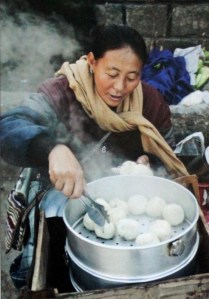 Surrounded by Tibetan women in traditional dresses, their long hair tied up with a braided band across the front. Knitted products such as yak wool socks and ponchos line the streets. Gems and stones, plus thangkas and hand carved Buddha statues are proudly on display. Suddenly you are in Tibet, not India. The locals call McLeodGanj, Little Lhasa in reference to the capital of Tibet. The exiled Tibetan government is located in McLeodGanj, as well as the home of H.H. The Dalai Lama.
Chinese Suppression
This tiny town in Northern India has a three to one ratio of Tibetans to Indians. Though the landscape is nothing like the ‘roof of the world’ that the actual Tibet is called, it may be the closest one can come to experiencing Tibetan culture. The Chinese government has invaded Tibet and made it a death sentence to say, “Free Tibet,” have a Tibetan flag, or even a picture of the Dalai Lama. Tibetan children are forced to wear Chinese school uniforms and all signs and posters are now in Mandarin. If you go to Tibet and buy traditional Tibetan products, it is very likely that they are actually made by the Chinese and shipped in on the newly created railroad.
Tibetans that want to escape this cruel existence have to sneak into the cold Himalayan mountains and try to avoid military patrols. Many Tibetans have died on this journey, though those that make it keep hope by the idea of one day being granted an audience with The Dalai Lama.
I can’t think of anything sadder than peaceful Tibetan Buddhist being brutally beaten just for being themselves. My time in McLeodGanj made me a huge supporter of the Free Tibet movement. As I wear a shirt with the Tibetan flag, a bracelet that reads, “Free Tibet” and a pendant of the Dalai Lama, I am making a choice to stay clear of China and not support their ruthless government with my tourism.
Things to Do
I learned most of this by going to the Tibetan Museum right next to His Holiness’ temple. The museum shows a documentary on Tibet most days at 11 a.m. and 3 p.m. I left the museum feeling horrified by the violence and cruelty shown to the Tibetan people. To recover, I then visited The Temple of the Dalai Lama. While walking into the temple I saw the yellow cushion that His Holiness sat upon during The Teachings. I recalled his lesson on love and compassion and remembered that he holds no ill will towards the repressive Chinese government.
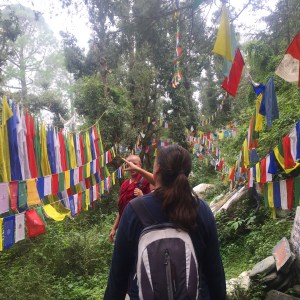
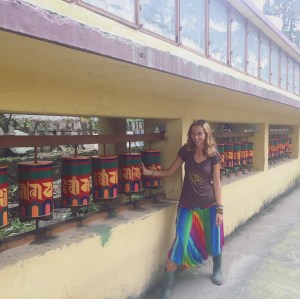
After visiting the temple it is very therapeutic to walk the kora around the entire palace. As I walked the kora, clockwise, I felt like I was in a dream of never ending prayer flags and prayer wheels. Monks walked the kora chanting, “Om mani padme hum,” under their breath as their fingers moved across their prayer beads.
After taking in all of this history and culture I was quite hungry. A friend of mine tipped me off that Shangri-La Restaurant has the best price for food quality. This Restaurant has short tables on the floor surrounded by cushions. The place is quite small and we often endEd up sharing a table with a stranger/soon to be friend. Nick’s Restaurant was also a favorite of ours as they have kombucha and delicious chocolate mousse cake. If you prefer a quick bite to eat, there are Tibetan men and women making momos on the street. There are also street vendors of Tibetan handicrafts. This is a way to buy Tibetan products and know that the proceeds actually go to Tibetan people.
Norbulingka Institute
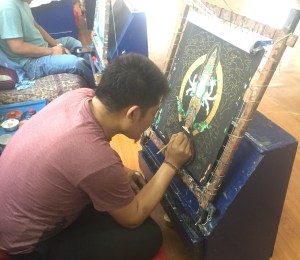 The Norbulingka Institute is in Sidhpur. It is named after the Dalai Lama’s summer palace. This Institute preserves Tibetan culture by teaching Tibetan refugees how to make traditional handicrafts. The Institute gives a free tour and the entrance fee is only 100 Rupees. I was shown Tibetans creating wood sculptures, working metal, painting thangkas and sewing intricate patterns. The Institute also has a cafe, garden, museum, souvenir shop, and an exquisite temple.
Tushita
Tushita offers a ten day introduction to Buddhism course that many of my friends raved about. I did not take it but next time I’m in the area I certainly hope to. Tushita hosts many prominent guest speakers and you can check out the schedule on their website.
 Chronicles of a Wandering Soul