Chapter 5
Eco-Agric is the name of the non-profit that I volunteered for in Western Uganda. As luck would have it, I spent an entire month there and had a positive experience. Eco-Agric is a well established organization and they host many volunteers at a time. It was refreshing to be surrounded by five Europeans after my traumatic experience with the Ugandan police. We lived together in earthbag homes made by previous volunteers. We interacted mostly with each other and the host’s role was very hands off.
Eco-Agric helps the community in many different ways such as women empowerment through crafts, gardening, teaching hygiene to kids, natural building methods, HIV and AIDS support groups and financial planning. My five hours of work a day were devoted to the garden. In prior Workaways in Europe I had gone to hosts because I had an interest in their project and they then taught me more about it. I thought the same would happen here but Africans tend to make an assumption that the white man knows all.
Gardening in Uganda
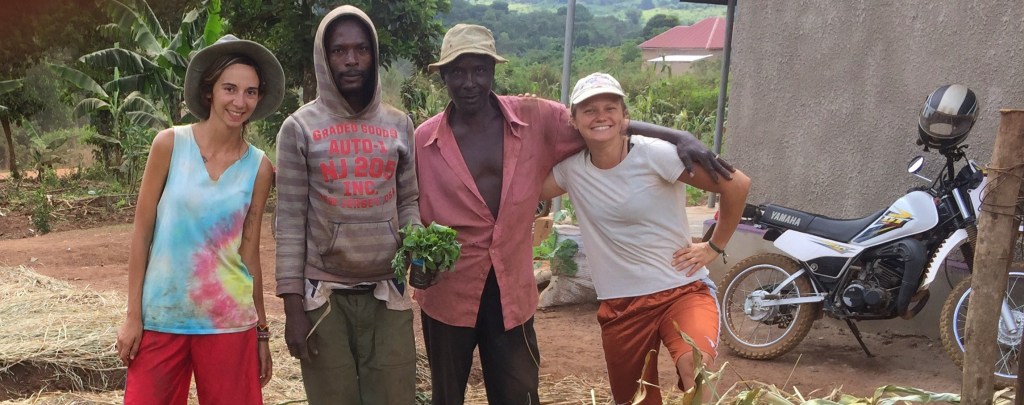
Another volunteer and I were given huge fields and told to make demo gardens. Sounds great, but we didn’t know the first thing about gardening techniques. A kind local man named Robert was assigned to our project. He is an experienced farmer but was instructed to do whatever we wanted. I adored Robert. He was so kind and good natured, even when our host (head of the corporation) would go on a tirade. He didn’t want to overstep his instructions to only help us with the physical labor so the other volunteer and I were left to figure out the best methods for gardening on our own.
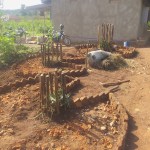
We went to a wifi cafe in town and looked-up gardening techniques. We were told about keyhole gardens and decided to start there. These mini gardens have a compost basket in the center of a dirt mound. The soil starts high around the basket and slopes downward like a volcano. You water the compost and it adds nutrients to the soil.
We also made garden beds with a sloped irrigation system to redirect the rain water. We tried intercropping and a potato sack herb garden. Before I left, the pumpkin seeds I had planted had sprouted and I felt like a proud parent.


Western Stereotypes
Were these the best methods for farming in Western Uganda? I have no idea! I’m sure a local could have taught us a lot but as the “mzungu” or white man, everybody wanted to learn from us. We tried to be honest and explain that we didn’t know any more than them and needed help but locals only laughed at that idea. How could they know more about gardening than the mzungu with all of their resources and education? The stereotype was so deeply embedded into their culture, it was impossible to break.
One day while gardening, Robert asked me if in America there are any people that have no home and go to bed hungry. I told him there are homeless people all over LA and he laughed in amazement and said he didn’t believe it. He was raised to believe that all white people have money.
Teaching English in Africa
This doesn’t just pertain to farming. If you volunteer to teach you will be handed over a class. There is no briefing on the skill level of the students or what they typically do. All of a sudden you are standing in front of a class of adorable tiny children and you have to wing it. These teaching gigs don’t require you to have any qualifications. If you are a native english speaker that is good enough. You would think that the usual teacher would want to show how the class is normally operated to maximize the benefits for the students. Instead the teacher sits in the back relieved to have a break. They translate if need be and have a stick to beat the children if they misbehave. Many times, there are no writing supplies or books with lesson plans in the entire classroom. It is assumed that whatever comes out of your mouth will be helpful, you are after all the mzungu.


 Chronicles of a Wandering Soul