Chapter Thirteen
Zanzibar is a place that probably sounds vaguely familiar, but you might not be quite sure where it is. It kind of sounds like a character from Aladdin. Was the Sultan named Jafar or Zanzibar?
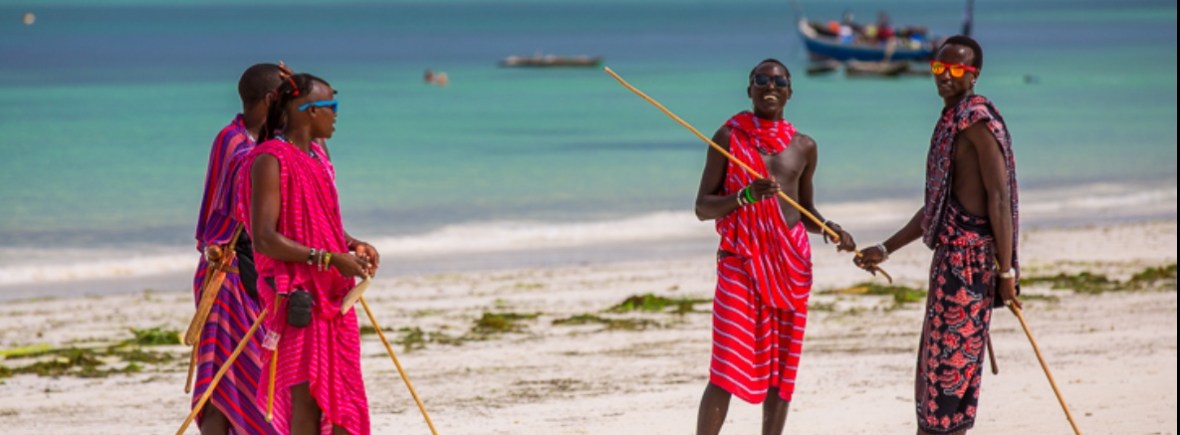
Though technically a part of Tanzania, Zanzibar has both a Portuguese and Arabic feel due to previous occupations. The island was used as a port city for trading with mainland Africa. Zanzibarian farmers were encouraged to grow spices giving Zanzibar it’s current reputation as the spice island.
I’d heard of Zanzibar’s white sandy beaches, crystal clear blue water, and full moon parties. My sister was able to meet up with me for one week and thanks to our previous adventures in South East Asia, we have a thing for full moon parties. Zanzibar seemed like the perfect place to relax while taking a break from volunteering.
Zanzibar is expensive. The island definitely caters to Western clientele. However, if you have a travel companion, it is possible to split a private room for slightly more than a dorm bed. You can fly directly into Zanzibar which will probably be more expensive than a flight into Dar Es Salaam. Alternatively, you can take a ferry from Dar Es Salaam.
Very Touristy
During my previous adventures, when I met other volunteers they would always be going to Zanzibar as a conclusion to their volunteering experience. It seemed like the place to go! Clearly all of us mzungu had the same thought. I stepped off the ferry and was in culture shock to suddenly be surrounded by my own race. After three months of always being the only white person in the village, it felt eerie.
What to Wear
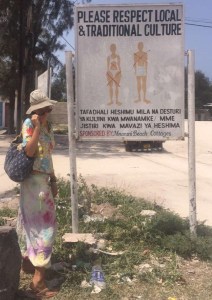
More shocking was the clothing being worn. I hadn’t worn short shorts in months and suddenly I was seeing caucasians walking the streets in mini dresses, rompers and shorts. They clearly had never been to mainland Africa. They were on vacation mode in a place that was catered to them. I have no problem showing skin but you just wouldn’t do that 60 miles away in a suburb of Dar Es Salaam.
Who goes to Zanzibar?
I also noticed a lot of middle aged and older caucasian couples. It makes sense that a young backpacker is probably in South East Asia or Central America doing that scene if they fancy an island. But these adults wanted to “do Africa” without ever experiencing Africa at all. I’m not trying to hate on Zanzibar. I had a lovely week off from volunteering but if you are only going to Zanzibar then just be honest and call it a beach vacation.
All that being said, my sister came to Zanzibar at my request. After three months of roughing it and wanting to show her how my life had been, we were suddenly transported to a Westernized bubble. I made it my mission to show her the real Africa, despite how easy it would have been to ignore it and have our Western “needs” catered to us.
Taking the Ferry
I was surprised by how expensive the ferries to the island are. There are two prices: one for Tanzanians and one for everyone else. There are two ferry options for taking you to Zanzibar. You can save $15 and take the Flying Horse slow ferry (about three hours).
When we arrived at the ferry two local men came up to my sister and me and told us we had to give them our bags. We said we could carry them inside ourselves but they made it seem like there was a mandatory bag drop off. Once we handed over the bags they walked us to the second floor lounge of the Flying Horse ferry and demanded that we pay them $10. I had to get rather feisty with them, explaining that they forced their services upon us and we simply couldn’t afford $10. We might as well have taken the fast ferry if we wanted to hand over extra money. Eventually they settled for a smaller amount.
This upstairs lounge only had mzungu in it. The non Tanzanian ticket is called VIP and the Westerners get segregated to their own sitting area. The area was nice with AC and reclining seats. It’s one of those weird things when you’re definitely getting treated differently because of the color of your skin but the treatment is positive. Is that still racism?
The journey to Zanzibar was turbulent. I don’t know if the waves were particularly rough on the day we went but the ferry rocked violently and everybody on board was sea sick. The more expensive Kilimanjaro speed boat will get you there in an hour. The Flying Horse ferry back is very cheap but they dock offshore overnight making it a 9 hour journey.
Stone Town
You’ll arrive in Stone Town which is a cute and charming town completely focused on tourism. This is definitely a great place to get souvenirs and look at local art. After a few hours you’ll be exhausted. If you show any interest in a scarf or hand carved spoon, the store owner will soon eagerly insist you come into his shop. Badgering, is what walking in Stone Town mostly entails.
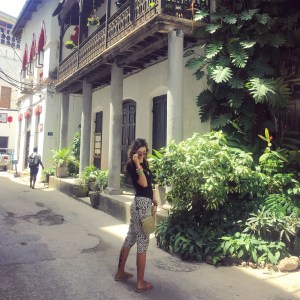
I wanted to show my sister cheap street food. We walked around for hours, only seeing expensive restaurants. As we got farther from the dock, we got into the more native area. Eventually we found a few benches and a tree where people were serving hot coffee and pre sugared ginger tea. We sat down with them and made friends with a cheeky man that sang to us. It took a lot of effort to find an authentic African experience for my sister but they are there if you look.
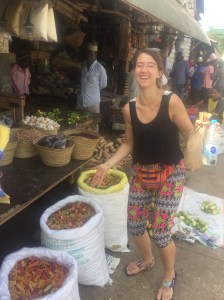 Our guest house had a kitchen so we went on a mission to find an open air market. Many Zanzibar residents straight up told us no such thing existed but I have a feeling they didn’t quite understand english. Eventually we found one and the veggie prices were standard for Africa.
On a Sunday night we came across a street food conglomeration by the pier. You should definitely try Zanzibar pizza but keep in mind it’s more of a crepe you can order either savory or sweet. Stone Town is a fun experience but let’s be real, you’re actually going to Zanzibar for the beaches.
The Beaches
I knew very little about Zanzibar beaches prior to going. After doing some research I discovered that the Northern tip of the island is known for the white sand and super blue water. The Eastern side of the island has a sandbar giving a dramatic difference in high tide and low tide and some cool tide pools. We decided to spend a few days in each location.
Nungwi
To start off we went to Nungwi. It was recommended that we pay $30 and get a taxi there. After some asking around we found a bus and paid $4 each. The bus turned around and back tracked a few times as it waited to fill up, but we eventually made it to our destination and had a lovely native experience. As the bus filled up I had to lift my obnoxiously large bag on my lap so passengers could squeeze into the aisle. True, I was uncomfortable but I was satisfied to have my sister experience my daily struggles with me.
Nungwi is a super chill beach village. I’d recommend it for anyone going to Zanzibar. There are a few fancy resorts on the beach but one street back from the coast are wooden and metal shacks selling affordable street food. Little Zanzibar children roamed the streets going from shop to shop as their parents worked. It’s was an authentic African experience.
Nungwi beach is lovely and has a few beach bars with sunset happy hours. One day though, we walked two miles to Kendwa beach and it was absolutely phenomenal. Never have I seen such a sharp contrast of white against blue. For the perfect beach day this is the spot.


Street Food

My sister developed a love for cassava while in Nungwi. For those of you that don’t know, cassava is a staple food in Africa. It’s a root that easily grows, high in Vitamin C. It tastes like a very dense potato. I showed my sister the cabbage I’d been raving about. Fry (chip) stands have cabbage as a topping. Many a time in Africa I’d try to get a bag full of cabbage much to the amusement of the proprietor.
Kiwengwa
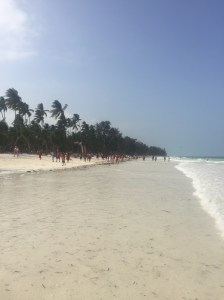 A few days later we relocated to the east side of the island. I had wanted to be at Matemwe beach because I heard it has a cool local vibe. I found a cheap guest house at Kiwengwa so instead we went there. On a map they looked close enough. It turns out this is the Italian beach. Who would have figured they have a specific beach just for Italian tourists in Zanzibar?
Walking on this beach was exhausting. Locals were on the prowl and I couldn’t enjoy the ocean without having someone come up and try to sell me something. When I would try to quickly end the interaction they would say, “hakuna matata” which means,” take it easy.”
An Anecdote about a Persistent Local
There was one man that was particularly shameless that I can’t help but remember. I almost respect him for his entrepreneurship. My sister and I were sunbathing when he kneeled down beside us. In Africa, people often reach out their hand in a fist bump/high five sort of greeting. I quickly learned to ignore this gesture because more than likely if you reciprocate the fist bump, they will then grab your wrist and hold on, keeping you there. Well this guy reached his hand out and when I fell for it, he grabbed my pinky and twisted it. I shouted out in pain and he gave me an African, “sorry” (s-áw-ree). Disgruntled about his grabby greeting I layed back on the beach and tried to ignore him.
He didn’t leave. He had a wooden boat he wanted me to buy. Just to get rid of him I told him that I’m homeless and have no place to put it. That didn’t discourage him though. Finally, accepting that I wouldn’t be able to enjoy myself on the beach I decided to make the most of his intrusion. I had been wanting to introduce my sister to my favorite African street food, sambusa (also known as samosa). I asked this Zanzibarian where I could find sambusa and he said he knew one place in the village where it was sold. For $20 he offered to buy 5 of them and bring them to us on the beach. Usually a sambusa costs anywhere from 100-500 shillings which is equal to .05-0.30 cents. Even including the delivery fee, the rip-off was astronomical. When somebody is trying to scam you that much, you almost have to respect them for having the guts.
With this inside information, of one shack in the village selling sambusa, we walked there ourselves and were able to find it. Right before we located the correct food vendor, we asked a different guy if he knew where we could find sambusa. He pointed out the correct shop and came with us. He intercepted our transaction with the vendor and told us the sambusa would be 1,000 shillings each. We ignored him and asked the man actually making them and they were 400 shillings a piece. The man that walked us across the street thought he deserved a 60% commision. No information is free in Africa. Anyways, the sambusas had a thick breading and were jam-packed with veggies and a curry sauce. Definitely worth the 400 shillings a piece.
Language
On mainland Tanzania the greeting is “mambo” with a reply of “poa.” If you say, “mambo” back (easy mistake given our natural tendency to say hi and reply with hi) you’ll get a glare and probably a comment about how you don’t know Swahili.
Confusingly, on Zanzibar they say, “Jambo” (which they also say in Kenya) in which the correct response is, “Jambo.” When you meet someone they will go through a sequence of greetings and if you give them the proper reply each time they’ll then bring it in for a brotherly handshake and claim that you, “know Swahili.”
Here are the greetings you are likely to get and the proper responses
Jambo
-Jambo
Mambo
-Poa
Habari
-Nzuri
Karibu
-Asante Sana
Also a child might say, “shikamoo” which is a sign of respect in which you would reply with, “marahaba.”
Conclusion
I had a great time on Zanzibar though that’s mostly because I was with my sister. Lodging and the ferry are expensive but food and public transport on the island can be done quite cheaply. I hear there are red colobus monkeys in the center of the island. It is also a place where many people get PADI certified for scuba diving. The island definitely focuses on tourism but there are also a lot of locals just trying to make a living. I wouldn’t say that Zanzibar is a must-do but I definitely had an enjoyable time.
 Chronicles of a Wandering Soul